Smarter, more efficient and sustainable production with integrated automation solutions
Text Evi HussonImage EKB
A complete solution through collaborative effort
Many companies approach EKB for help producing smarter, more efficiently and more sustainably with integrated automation solutions. EKB specialises in end-to-end industrial automation solutions, delivering projects from A to Z, from consultancy to implementation. René Klappe, project manager at EKB, explains the automation options in more detail using a real-world example.
“Our customer wanted to renovate and improve its production line, where metal containers holding flammable substances are filled,” Klappe begins. “After receiving the specification, we carried out a preliminary study to gain a clear understanding of all the requirements and identify the best solution to engineer.” One of the aims was to improve the return flow of metal containers holding flammable substances. “These containers have a label that, in the old setup, had to be removed by hand before they could be reused. Instead, we opted for a new labelling method that keeps the label securely attached to the container during use in accordance with ADR regulations, while allowing it to be easily removed for recycling.” He continues: “Using 3D modelling, we designed a machine that wraps the label around the metal container with plastic strips. A machine vision system records the dimensions of the containers. Custom-made software carries out checks, removing rejected products from the line and ensuring that the labelling is always applied correctly. The 3D production drawings helped us discuss the design with the customer transparently.”
Return flow
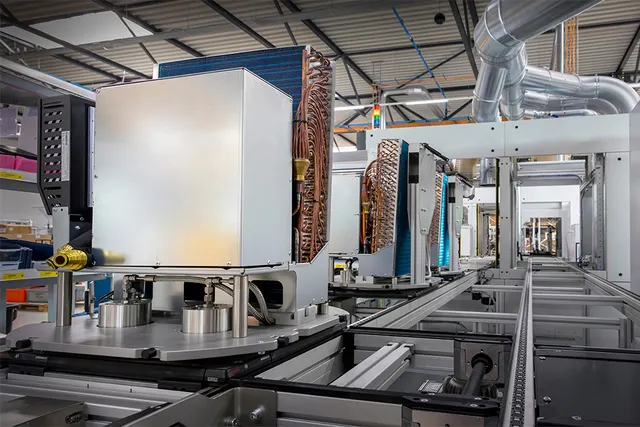
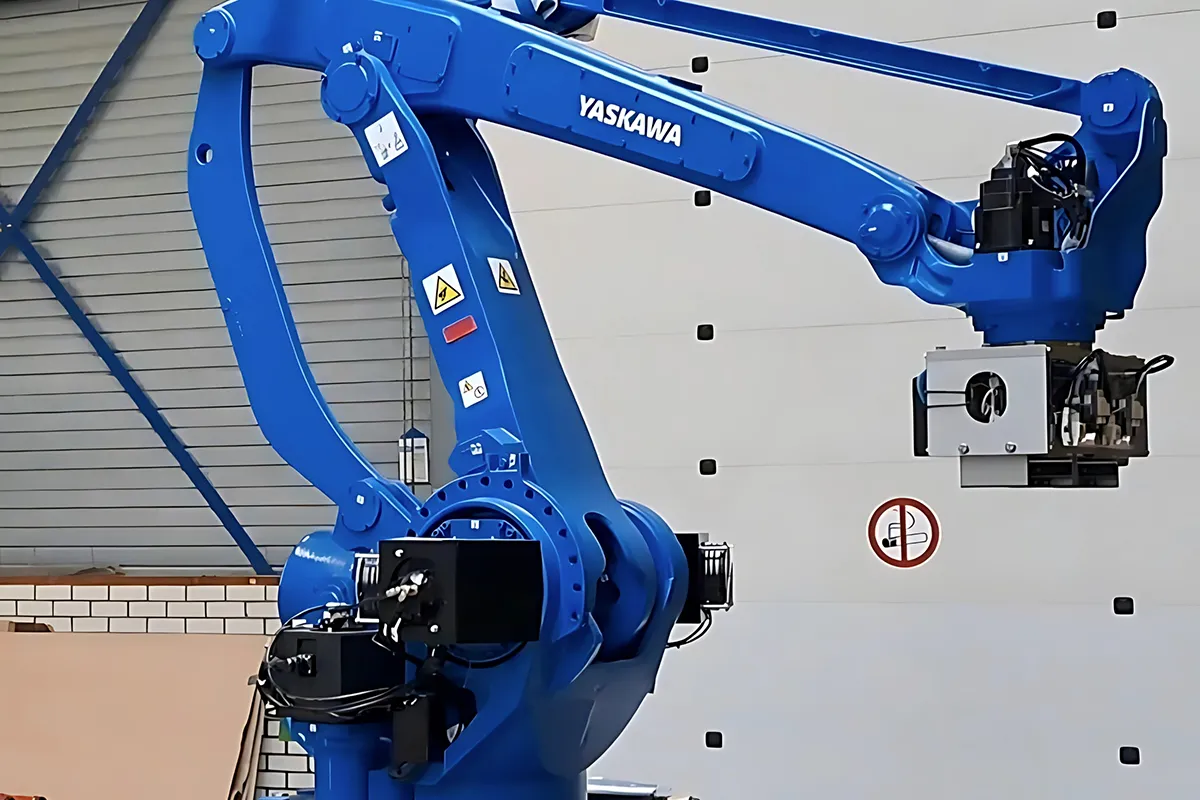
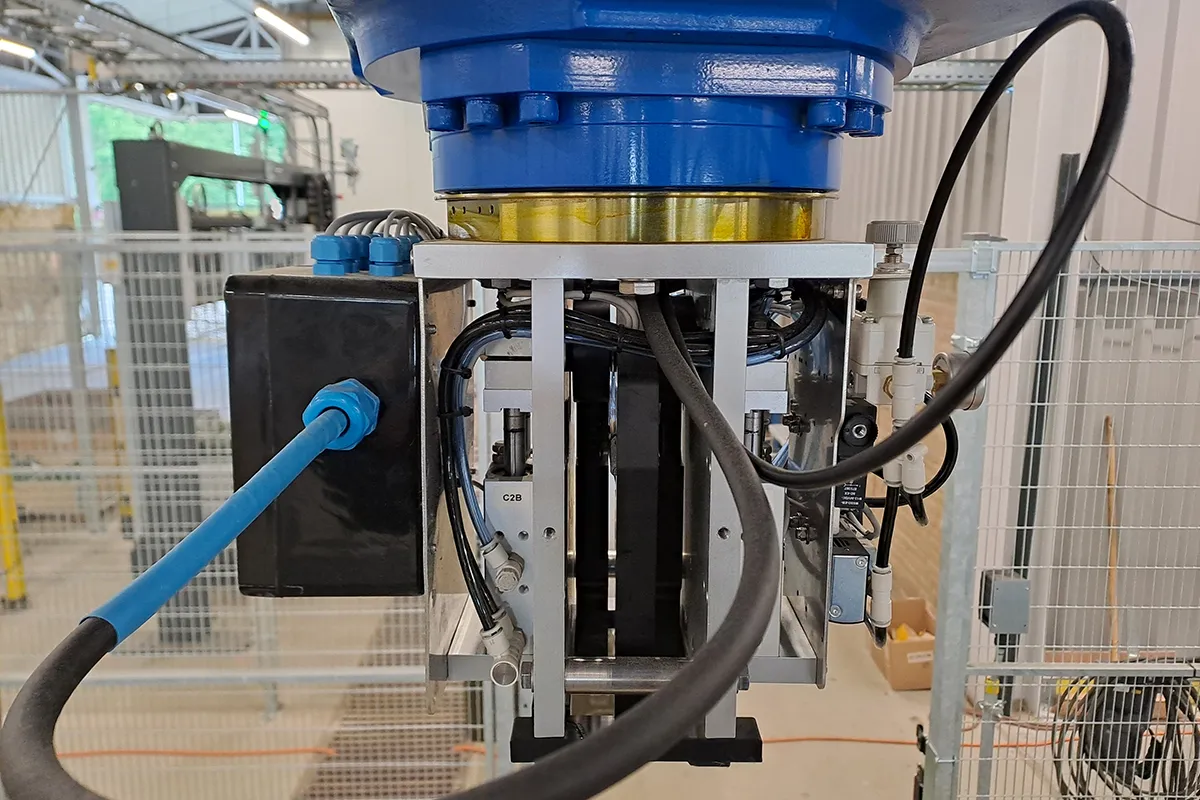
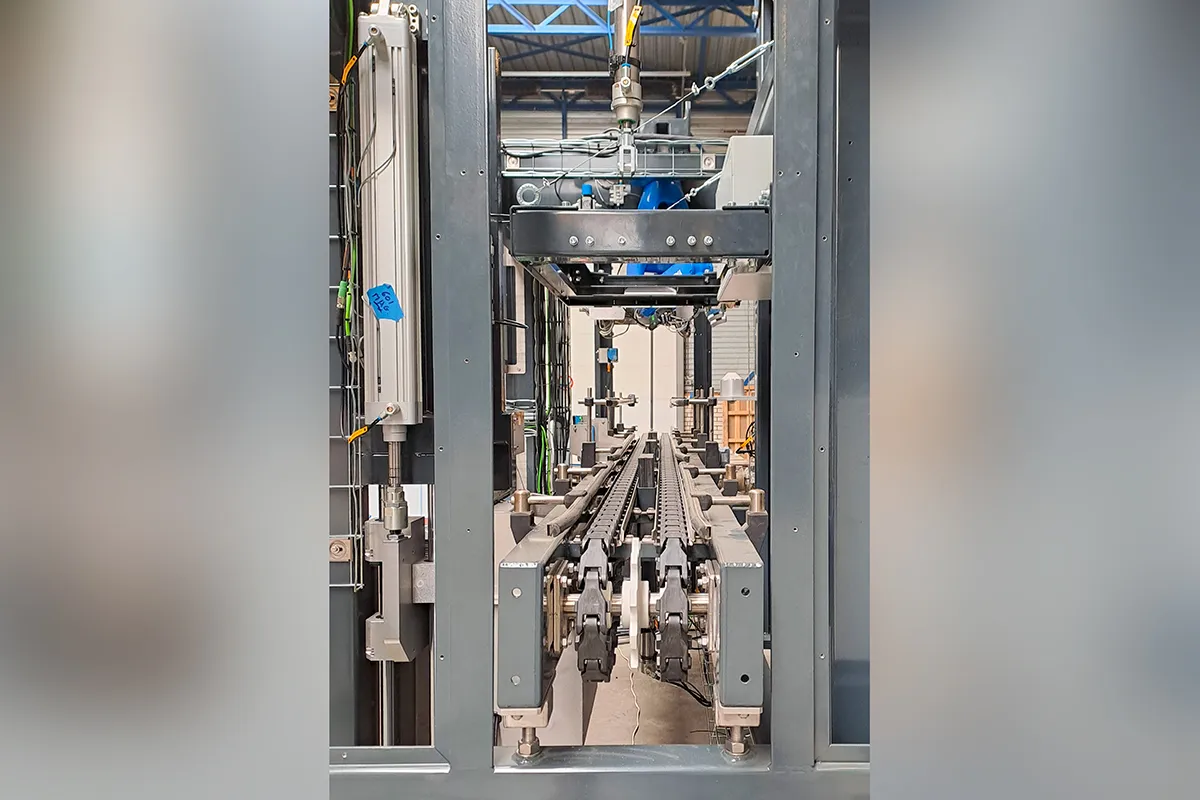
The new labelling method also made the return flow more efficient. “In the new setup, used containers are secured in a specific position on arrival, so that the strips can be removed from the containers mechanically with a hook and recycled to make new strips. The labels can also be reused.” The machine then inspects the used containers to determine whether they are suitable for reuse. If they pass inspection, they continue along a fully refurbished conveyor to a pick-and-place robot, which grips two containers at a time and moves them to the next processing station. There, six containers are rinsed at once. They then move on to the filling station.
Foam-free filling
The filling process is an impressive feat of engineering. “The old filling station used a pump, which often caused foaming and meant a lot of cleaning. To prevent foaming, we developed a new filling system with an intermediate storage tank, using gravity to fill the containers in a different way. Foaming is now a thing of the past. The new machine significantly increases efficiency.”
After filling, the containers continue along the line to the inspection station. Whereas leaks were previously checked manually, this is now fully automated. The containers are mechanically rotated 180 degrees, and infrared sensors, specially made for this project in Switzerland, detect any drops that may be escaping from them. If a leak is detected, the affected containers are rejected and removed. Those that pass the leak test travel along a discharge conveyor to the final processing station, where the caps are sealed, the containers receive new labels and are placed in a crate. Finally, an autonomous forklift truck that uses laser triangulation to determine its position moves the filled crates to their destination in the factory.
Collaborative effort
Specialists from several EKB sites joined forces on this project. “Thanks to this collaborative effort, the customer can now produce smarter, more efficiently and more sustainably. That’s what we’re here for.”
Project approach
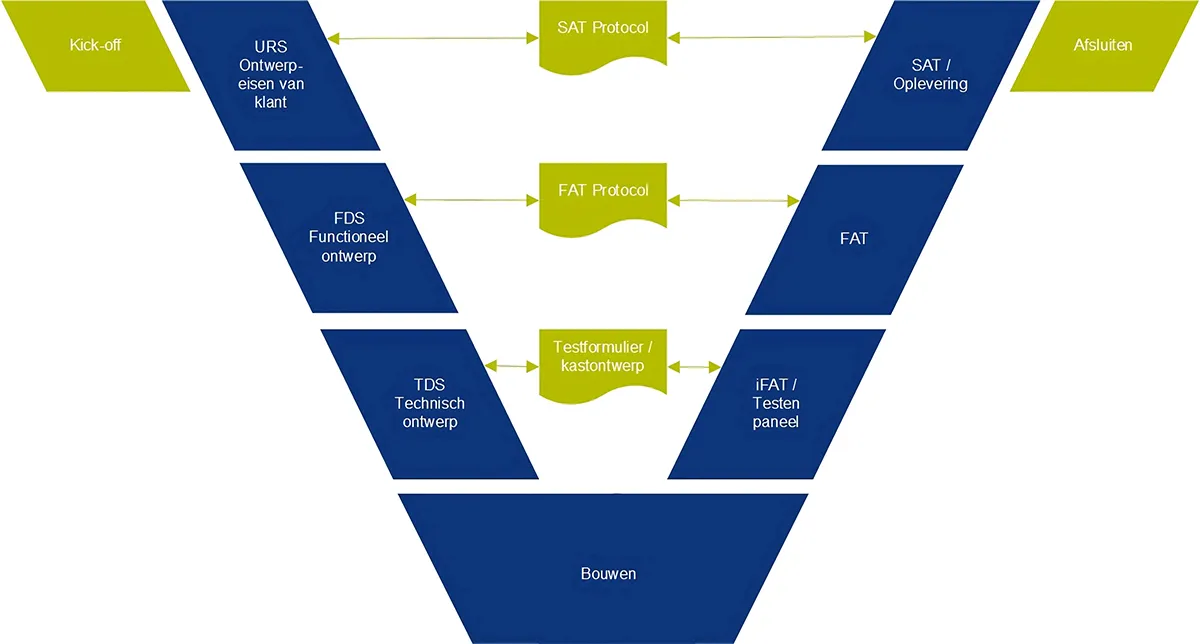
EKB follows the V-model, carrying out various phases until the project is complete. The V-model is shown schematically below. The development phases are on the left, while the validation phases are on the right. The two paths meet at the bottom of the V in the construction phase.
Have a business enquiry for EKB Groep? Get in touch
Companies in this story
Keep following this
Get an email when a new story is published. No account needed.
- SubjectServices & solutions
- CompanyEKB Groep