Software, IT, OT & cybersecurity
A perfectly flat weft yarn, thanks to deep integration of a simulation model
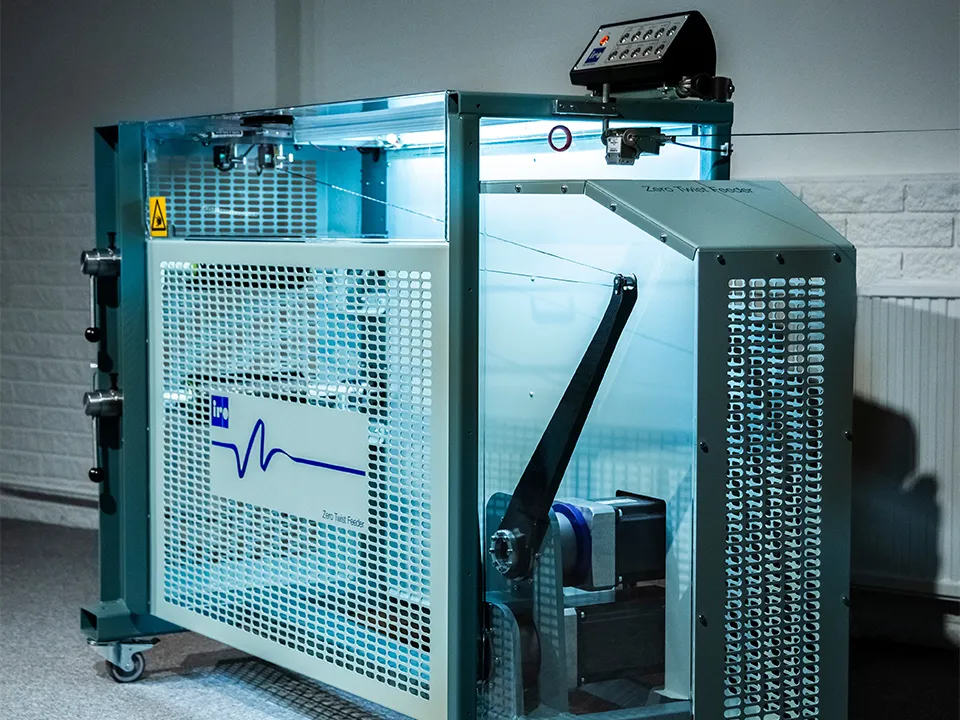
Swedish company IRO AB has been supplying innovative accessories for textile machines for more than sixty years. With the development of the Zero Twist Feeder, it has once again underlined its pioneering role.
The new machine delivers yarn to the loom without a single twist. That is no easy feat: it requires an extensive model to synchronise bobbin speed with the movement of the gripper. This was made possible by the deep integration of a Simulink model, developed by Vintecc, into Beckhoff technology.
“A major player in a small niche”, is how Pär Josefsson, head of the R&D department, describes IRO AB. “We have always tried to push the boundaries. The more than one hundred active patents we hold are the best proof of that.” But developing the Zero Twist Feeder really stretched their expertise to the limit. Using simulation in the development of a machine control system was a completely new, but necessary, way of working for IRO AB. They therefore sought help from Belgian company Vintecc, which specialises in model-based software development and state-of-the-art technology to accelerate customers’ automation processes. Both companies had the same starting point for this project: Beckhoff technology was the best choice.
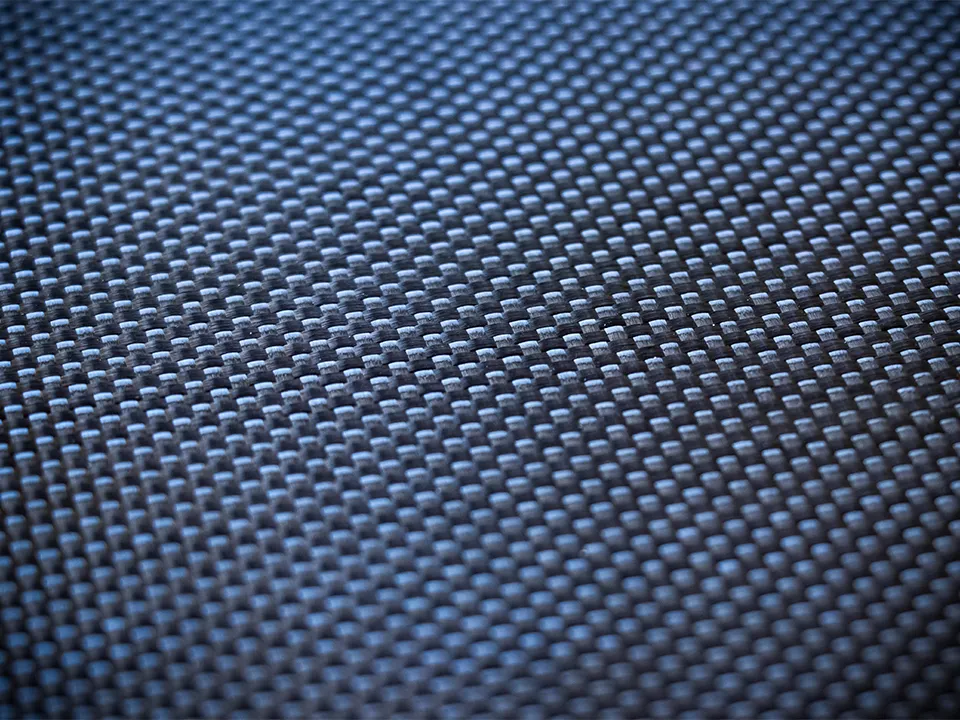
A twist in the weft yarn is the worst thing that can happen when working with carbon or glass fibres.
Balancing the tension
But what makes the Zero Twist Feeder so special? A twist in the weft yarn is the worst thing that can happen when working with carbon or glass fibres. Twists are visually noticeable and create a weak point in the fabric. Josefsson explains: “To avoid this, the yarn would need to be fed at a constant speed. However, looms operate at high speeds and pull on the bobbin at very irregular intervals.” The idea was therefore to use a buffer arm. “The arm buffers yarn between the bobbin and the loom. It unwinds yarn from the bobbin at an average speed, keeping it taut at all times. As soon as the loom needs more yarn, the buffer arm feeds it in at the correct, high speed for the weft,” Josefsson explains.
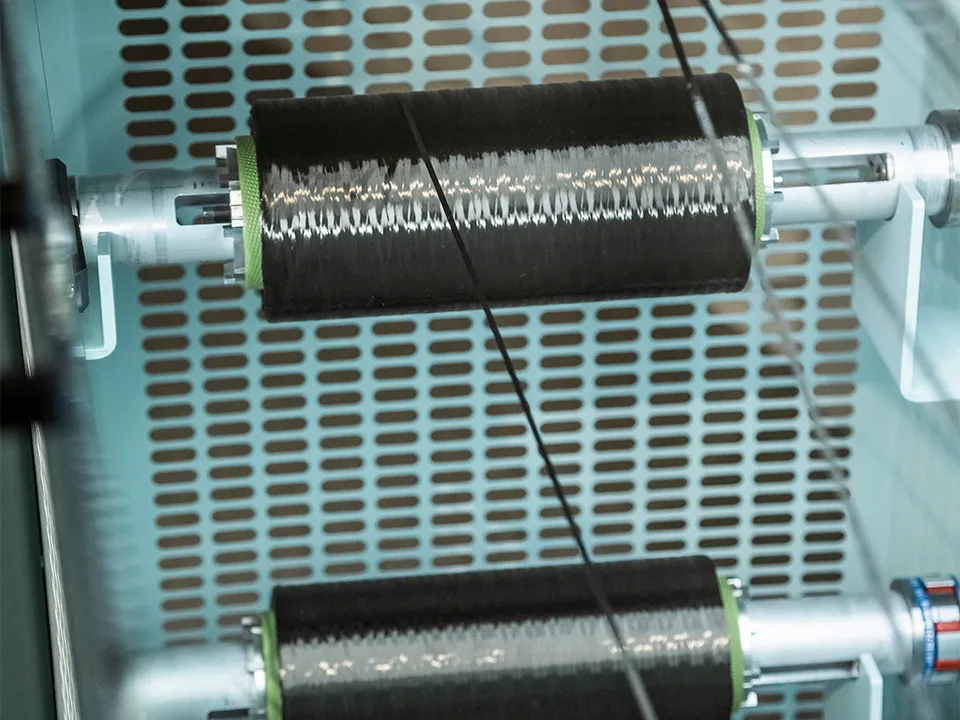
It requires an extensive model to synchronise bobbin speed with the movement of the gripper. This was made possible by the deep integration of a Simulink model, developed by Vintecc, into Beckhoff technology.
Direct integration of the model
Vintecc project manager Brecht Vermeulen explains: “First, we built a digital twin of the machine. All the software was programmed in Simulink and divided into several submodels. The advantage of combining Simulink with Beckhoff TwinCAT technology is that there is no need for separate PLC code. The model developed in Simulink can be integrated into TwinCAT in detail. You can visualise it, configure it and then connect it directly to the I/O and even the drives. Any change to the parameters, whether in the model, in TwinCAT or in the hardware, is immediately sent to the TwinCAT runtime. This kind of deep integration is only possible with Beckhoff and offers many benefits. When the machine arrives at the end customer, all we still have to do is connect the model to the actual tasks and I/Os.”
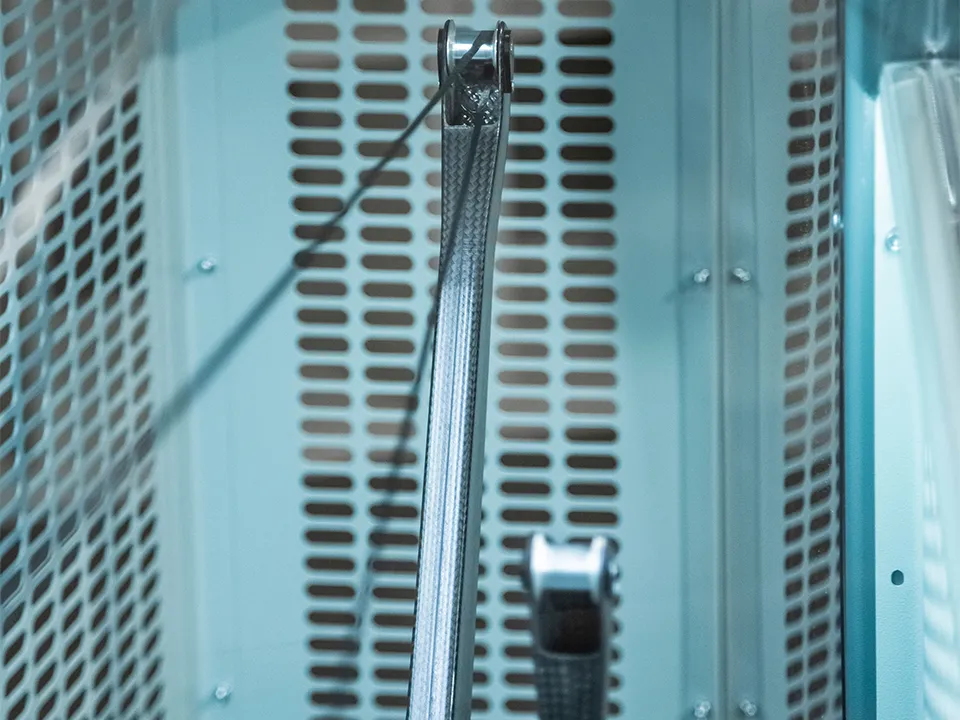
The arm buffers yarn between the bobbin and the loom. It unwinds yarn from the bobbin at an average speed, keeping it taut at all times.
Standard components, maximum performance
Opening the control cabinet reveals a great deal of Beckhoff hardware. It was an obvious choice for Vintecc. “The AX8000 servo drives and high-performance EtherCAT communication are the perfect combination for achieving the fast cycle times we need. They deliver maximum performance and dynamics. Tuning the drives was key to success. I was able to rely on support from Beckhoff in Belgium and Sweden.” Vintecc chose AM8000 synchronous servo motors. “Most of what we used is actually standard equipment. That is what makes this application so remarkable. Standard hardware is enhanced by the deep integration of the Simulink model into Beckhoff technology. A few drives, a controller and a motor are all you need,” Vermeulen concludes. Before the algorithms were tested on the actual hardware in Sweden, extensive virtual simulations were carried out in Belgium. Each prototype was analysed using measurements in TwinCAT Scope, which yielded new information to help optimise the Zero Twist Feeder mechanically. Josefsson says: “This was our first experience with directly implementing a simulation model in the machine control system. We would never have achieved our goal without it.
The first Zero Twist Feeders are already proving their worth at customers’ sites.”
Question about this story? Ask your question
Keep following this
Get an email when a new story is published. No account needed.
- SubjectSoftware, IT, OT & cybersecurity