Software, IT, OT & cybersecurity
Bridging the gap between control engineering and IT
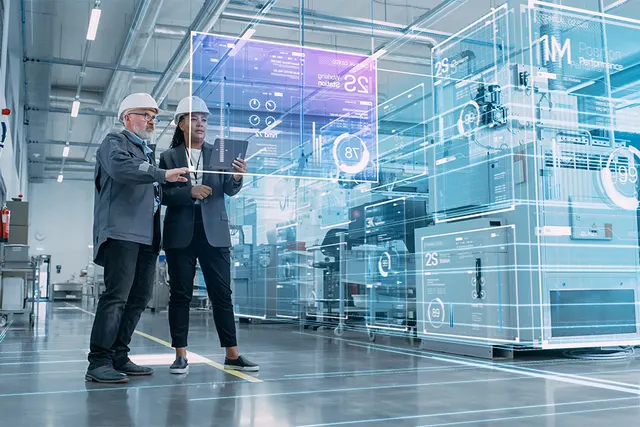
Control engineering and IT were separate worlds for a long time. Today, the boundary between them is becoming increasingly blurred, and automation solutions must also be able to bridge the gap between the two. That is exactly what the TwinCAT 3 platform from Beckhoff does. This real-time, PC-based control system offers the flexibility and openness needed to bring any Industry 4.0 project to a successful conclusion. With a broad range of functions, it gives machine builders all the tools they need to optimise their machines, develop new services and take advantage of new opportunities, including artificial intelligence.
Analysing and understanding the data can help identify problems such as downtime and wear …
The TwinCAT software system transforms any PC-based system into a real-time controller with multiple PLC, NC, CNC and/or robotics systems. TwinCAT 3 marked the start of a systematic programme of further development that redefined the world of automation technology. Beckhoff Automation Support Engineer Kim Robbens, a TwinCAT 3 product specialist, keeps abreast of all the latest developments relating to the platform. “What began as a straightforward PLC and NC solution in TwinCAT 2 has now grown into an ecosystem of components. TwinCAT 3 links standard automation tasks with scientific automation tasks, such as condition monitoring and measurement technology, and everything related to Industry 4.0. TwinCAT 3 brings all these technologies together under one roof in the Microsoft Visual Studio environment, which is effectively the most widely used development environment.”
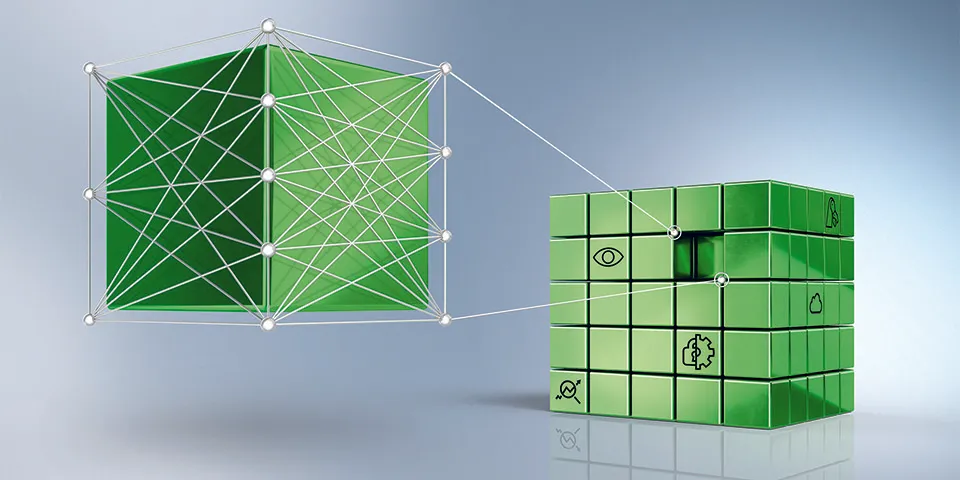
Intelligent algorithms can be incorporated as machine learning algorithms via TwinCAT ML and run in real time, enabling machines to monitor themselves.
Seamless integration and the latest technology for faster, more efficient machines
TwinCAT 3 continues to meet all basic requirements, including PLC and NC, while also offering various components that give machine builders a much wider range of possibilities. In addition to the basic IEC 61131-3 PLC languages, including object-oriented programming, the new TwinCAT 3 architecture also supports C/C++ as programming languages. C++ support opens up new possibilities for integrating designs created in Matlab/Simulink and even simulation software that supports Functional Mockup Interfaces into a real-time environment. Integrating all these different elements naturally places considerable demands on the hardware. TwinCAT 3 meets these demands in every respect. Processes can be distributed across different tasks, with cycle times down to a minimum of 50 µs, and CPU cores as required, making optimal use of the available resources. Using isolated CPU cores makes it possible to maintain a strict separation between the operating system and TwinCAT. To bring every automation project to a successful conclusion, seamless connectivity to all common fieldbus systems, a wide range of motion control systems and their associated safety applications is integrated.
TcVision, TcSpeech and IoT communication have been integrated into the same environment, enabling users to address the challenges of Industry 4.0 directly from a ‘standard’ PLC environment.
Industry 4.0: gaining new insights
The world keeps moving, bringing new possibilities. In recent
years, several technologies previously associated purely with IT have been added. TcVision, TcSpeech and IoT communication have been integrated into the same environment, enabling users to address the challenges of Industry 4.0 directly from a ‘standard’ PLC environment. For some time now, it has been possible to send data from TwinCAT PLC to a wide range of cloud applications. Cloud in the broadest sense, from on-premise (No)SQL databases to IoT brokers offered by various cloud service providers. For extensive process and machine optimisation, the challenge is to capture and store all real-time data, then analyse it at a later stage. With this sheer volume of data, it is easy to lose sight of the wood for the trees. To address this, Beckhoff recently added the TwinCAT Analytics suite to the environment. Analysing and understanding the data can help identify problems such as downtime and wear … This can lead to intelligent algorithms that are incorporated as machine learning algorithms via TwinCAT ML and run in real time, enabling machines to monitor themselves.
Question about this story? Ask your question
Keep following this
Get an email when a new story is published. No account needed.
- SubjectSoftware, IT, OT & cybersecurity