Software, IT, OT & cybersecurity
Building machines more intelligently and simply
Text Valérie CouplezImage Lenze
Most of us have one in our pocket or bag: a smartphone. Do you play games on yours too? The gaming industry is increasingly turning its attention to this platform. And why not? Smartphones are powerful, always within reach and easy to customise. The gaming industry is constantly reinventing itself, rapidly adapting to changing and emerging needs. Lenze, too, is inspired by the games sector’s capacity for innovation, customer focus and speed. One example is its ‘platform thinking’. Lenze is bringing this concept to the world of automation with NUPANO Suite, because engineering can be plug-and-play too.
Last year, the gaming industry generated global revenue of 180 billion dollars, more than film and music combined. The main driver behind this success is the platform strategy adopted by major game studios and console manufacturers. As gamers, we buy a console that is easy to set up thanks to the platform behind it, from configuring screen resolution and internet access to creating an account in the online shop and setting up user roles with different access rights. Everything is seamless and available in one place. This gives gamers quick and easy access to new games, without having to pore over a manual first. A simple plug-and-play solution. Lenze is applying this ‘platform thinking’ to the lifecycle of machines. This allows mechanical engineers to create a new generation of machines quickly and easily, packed with digital added value.
Standards as the foundation
Selecting hardware, creating a simple set-up, programming, activating and efficiently managing additional functions, working with partners, … all this is possible with NUPANO Suite. Updates can also be carried out to improve performance and security. This future of mechanical engineering is made possible by using standards. They enable us to deliver engineering at the highest level throughout the entire lifecycle of a machine. It is all about speed in development, commissioning, collaboration and new business models, all through a single platform. Lenze can provide the complete chain of ‘tools’, from the first idea for a machine through to its operation. The automation specialists have structured the suite around a product’s lifecycle, divided into three stages.
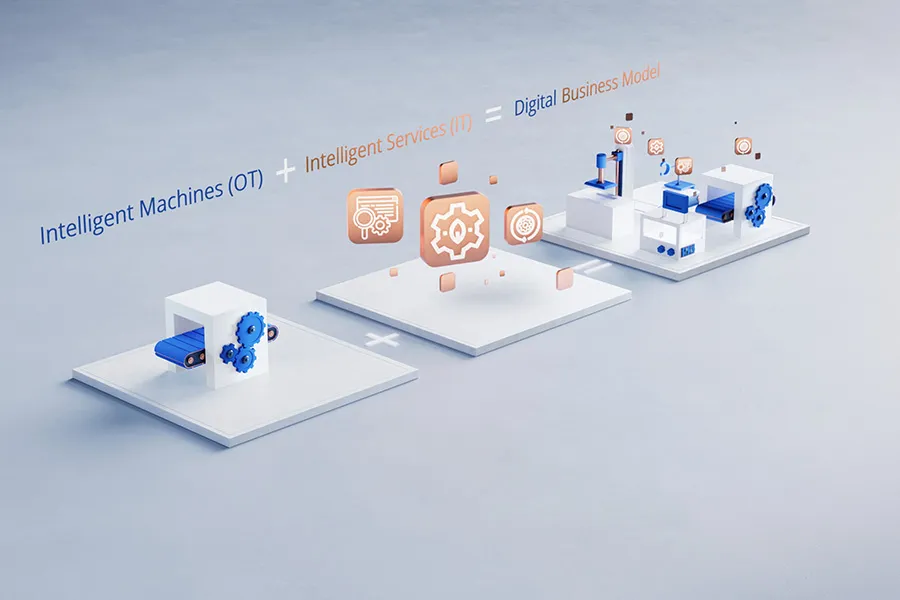
Planning phase
During planning, users have full access to tools such as System Designer. The wizard supports users in planning applications ranging from a single axis to complex machine solutions, using Lenze products and third-party components. The wizard draws on Lenze’s in-depth domain knowledge, and its calculation models are based on real-world experience. Drive systems can also be sized for energy efficiency. Everyone involved in the planning process works together. The machine process is modularised, and users can select solution elements or use wizards. Lenze provides connections to digital services such as CAD and EPLAN, and supports users in creating templates.
Build phase
The focus here is on engineering, commissioning and series production. Mechanical engineers have access to a software framework that allows them, for example, to integrate, test and scale ready-made Lenze software modules in their machine software. Commissioning is first carried out virtually, while the control cabinet and machine are being built. Developing software for mechanical and electrical systems in parallel shortens development time. Lenze offers a tool that makes it easy and efficient to install and manage software on series-produced machines. Suppliers do not need to reprogramme their applications. The customer’s software simply needs to run, because IT capacity is in short supply everywhere. The platform requirements are clear: everything must be secure, open, simple and easy for mechanical engineers to understand.
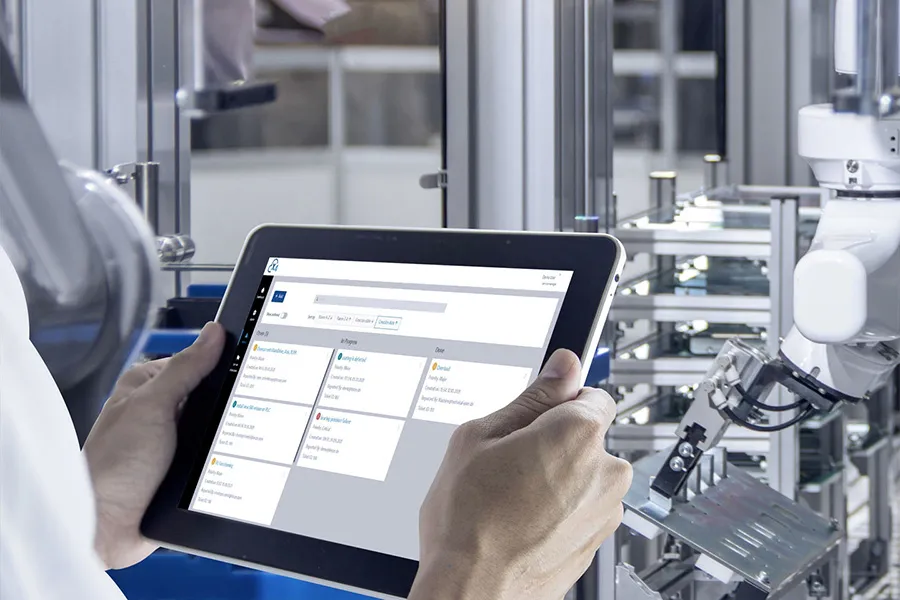
In operation
Once the machines are up and running, the machine builder supports customers in operating them. Through the centralised machine management in the suite, for example, they can offer service ticketing applications or add anomaly detection. At this stage, everything is about continually improving availability and productivity, because that is what matters today. Machine builders also have visibility, with an overview of all machines, including their software versions.
Extra life
Lenze previewed a new generation of controllers at SPS. The machine controller can take on control and IT tasks, making it a perfect fit for the platform strategy. The automation specialist also presented an edge device with a pre-installed app management tool, which allows IT to be scaled outside the machine controllers or independently of them. This enables customers to transfer out-of-the-box IT applications to the device. With the new hardware and NUPANO Suite, machine builders can reach a new level of engineering and business, with new opportunities, from the drive through to the platform for new revenue streams, greater transparency and security, and the computing power and connectivity they need. This approach is all the more compelling for customers, particularly in light of the Cyber Resilience Act and NIS2. In the gaming world, this would probably be called an extra life, a bonus that keeps the player in the game or simply gives them an extra competitive edge.
A business enquiry for Lenze? Get in touch
Companies in this story

Keep following this
Get an email when a new story is published. No account needed.
- SubjectSoftware, IT, OT & cybersecurity
- CompanyLenze