Software, IT, OT & cybersecurity
From simulation to virtual commissioning
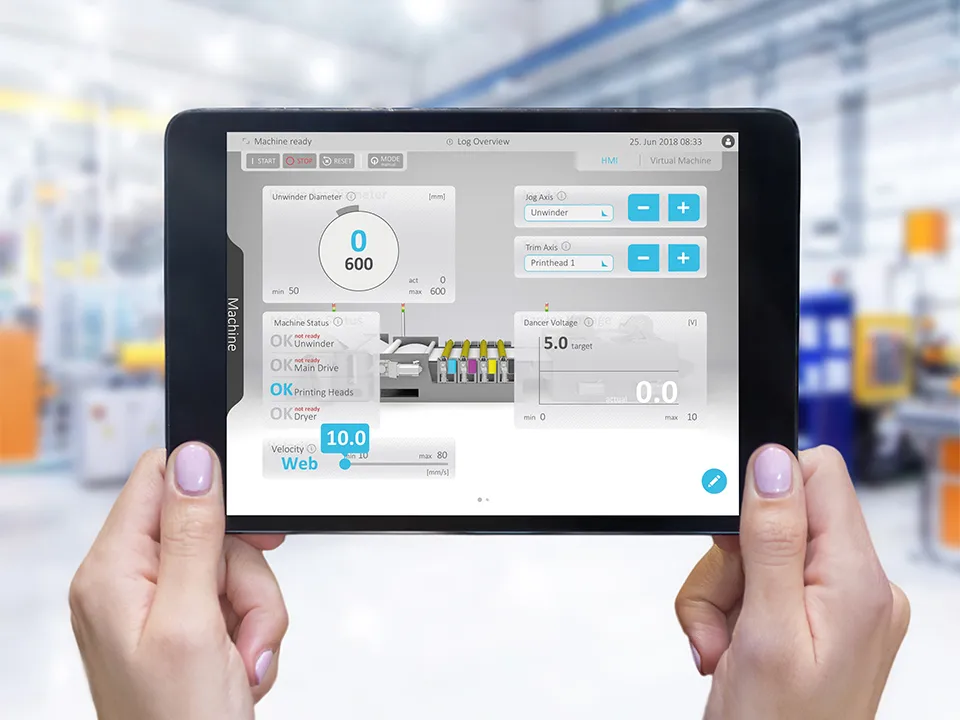
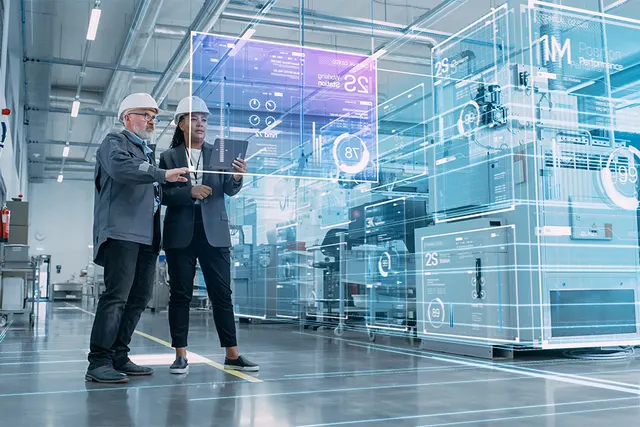
The vision of Industry 4.0 is closely linked to the digital twin. However, as the level of standardisation between individual development tools remains low, significant gaps in consistency remain.
Some of these gaps can now be closed in the field of simulation. As a result, digital engineering is already delivering significant efficiency gains.
More efficient processes and improved time to market are essential to competing in an increasingly fierce global market. With the digital twin, or Asset Administration Shell (AAS), industry has developed a concept to drive this forward. The aim is to maintain an uninterrupted flow of information throughout the entire life cycle of machines and systems: from data models used in the early stages of development, through machine data from the production phase, to asset management, maintenance and repair.
The path to digital simulation
In practice, however, gaps remain because development tools are only standardised to a limited extent. Do component and equipment suppliers support the relevant development tools with suitable data formats? Lenze has been involved in and promoting digitalisation in mechanical engineering, and this concept, from an early stage. Now the company is going a step further, extending its support for partners to include simulation and virtual commissioning. OEMs will benefit from extensive digital engineering capabilities in the design, development and production of machines and systems.
From simpler diagnostics to virtual commissioning
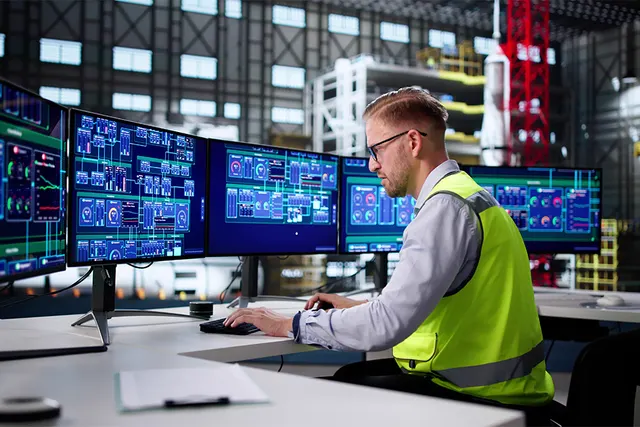
The crucial foundation has already been laid with a 3D simulation model, which provides a relatively general model of a machine. This makes it easier to diagnose complex machines. Taking this a step further and refining the 3D model makes it possible to predict specific aspects of machine behaviour, such as the throughput that can be achieved in operation. If the model is further adapted to the specific machine in greater detail, it can be used to simulate not only mechanical behaviour but also the entire manufacturing process, including machine logic, fault management, changes in operating modes and parameterisation. At this stage of development, virtual commissioning of the machine is even possible.
Addressing OEMs’ pain points
Lenze itself uses some of the best-known simulation tools: SimulationX from ESI ITI (simulation and dimensioning of drives), ISG-virtuos from ISG (virtual commissioning) and Virtual Teachware from Forward TTC (Augmented & Virtual Reality for HMI and machine diagnostics, as well as learning software for virtual training). In every case, the ultimate goal is to address the critical challenges at this stage of the life cycle. Experience shows that machine builders are looking for better diagnostics, shorter development times or more accurate planning when sizing drives. They can implement these applications themselves using Lenze solutions. The manufacturer advises on choosing the right tools and can provide support with modelling simulations and virtual commissioning. The first projects have already been completed, and Lenze has also prepared a showcase demonstrating the approach and the extensive possibilities offered by digital engineering through simulation and virtual commissioning.
Further development
While different data models are currently needed for different applications, standardised formats and interfaces should be used in future. Related concepts have already been developed under the names FMU (Functional Mock-up Units) and FMI (Functional Mock-up Interfaces). Lenze supports the established tools available on the market and is also continuously developing its digital engineering toolchain.
Conclusion
Whether the aim is better diagnostics, shorter development times or more accurate planning when sizing drives, simulation in digital engineering and concurrent engineering make it possible to implement machine concepts efficiently and quickly, while avoiding costly rework in particular. This is made possible by interdisciplinary development, in which control and IoT software in particular can be tested and validated on a virtual machine during the early concept and development stages.
Question about this story? Ask your question
Companies in this story

Keep following this
Get an email when a new story is published. No account needed.
- SubjectSoftware, IT, OT & cybersecurity
- CompanyLenze
- CompanyTTC