Software, IT, OT & cybersecurity
Mobile robots as scouts
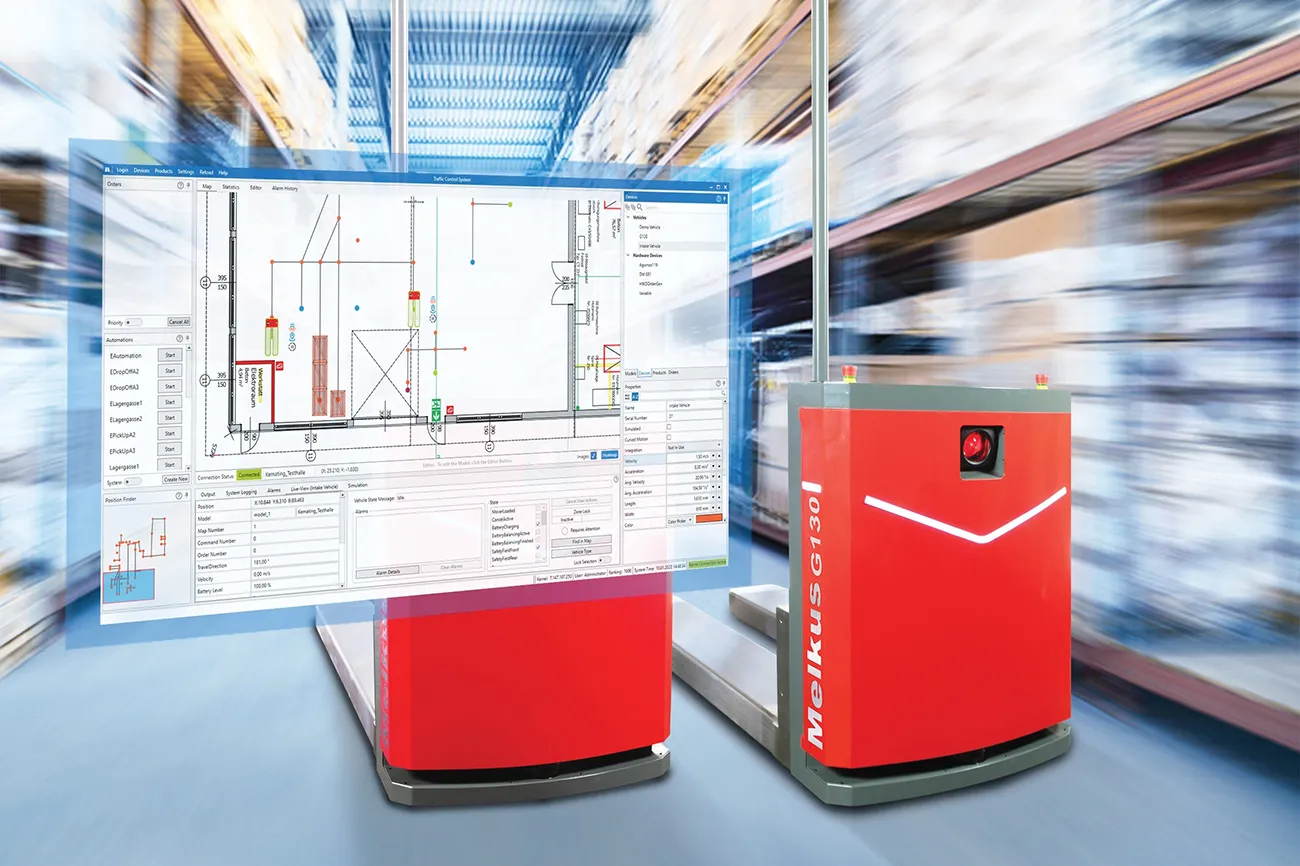
Digital transformation can deliver the desired results only if automation is comprehensive. In addition to the machines themselves, this must include robots and handling equipment, as well as the entire conveying system. Sigmatek has therefore developed its Traffic Control System, an open AGV fleet management system that works independently of the vehicle manufacturer. It not only handles planning, but also takes account of all possible routes, one-way traffic, permanent or temporary obstacles and user-defined restrictions. Interested? SigmaControl will be at INE on stand RED01.
Automated guided vehicles (AGVs) and autonomous mobile robots (AMRs) play a key role in making production processes more flexible. They can easily adapt to changing requirements, processes and transport routes. Sigmatek has several AGV and AMR manufacturers among its customers, who mainly use the Austrian manufacturer’s innovative automation systems for vehicle control, safety and drive technology. They particularly value the combination of an extremely compact design, high energy efficiency and uncompromising industrial suitability. At the most recent SPS, Sigmatek presented its open AGV fleet management system, TCS (Traffic Control System). It uses the standardised VDA 5050 interface for communication between the vehicle and the control system. This enables TCS to integrate AGVs and AMRs regardless of their brand and their connection to surrounding IT and automation systems.
Revolutionary navigation
AGVs and AMRs normally use contour-based navigation, which does not require artificial landmarks. However, this approach has its limitations, so it is supplemented by the SLAM navigation method. As they navigate, the vehicles capture features of their surroundings and dynamically build the map.

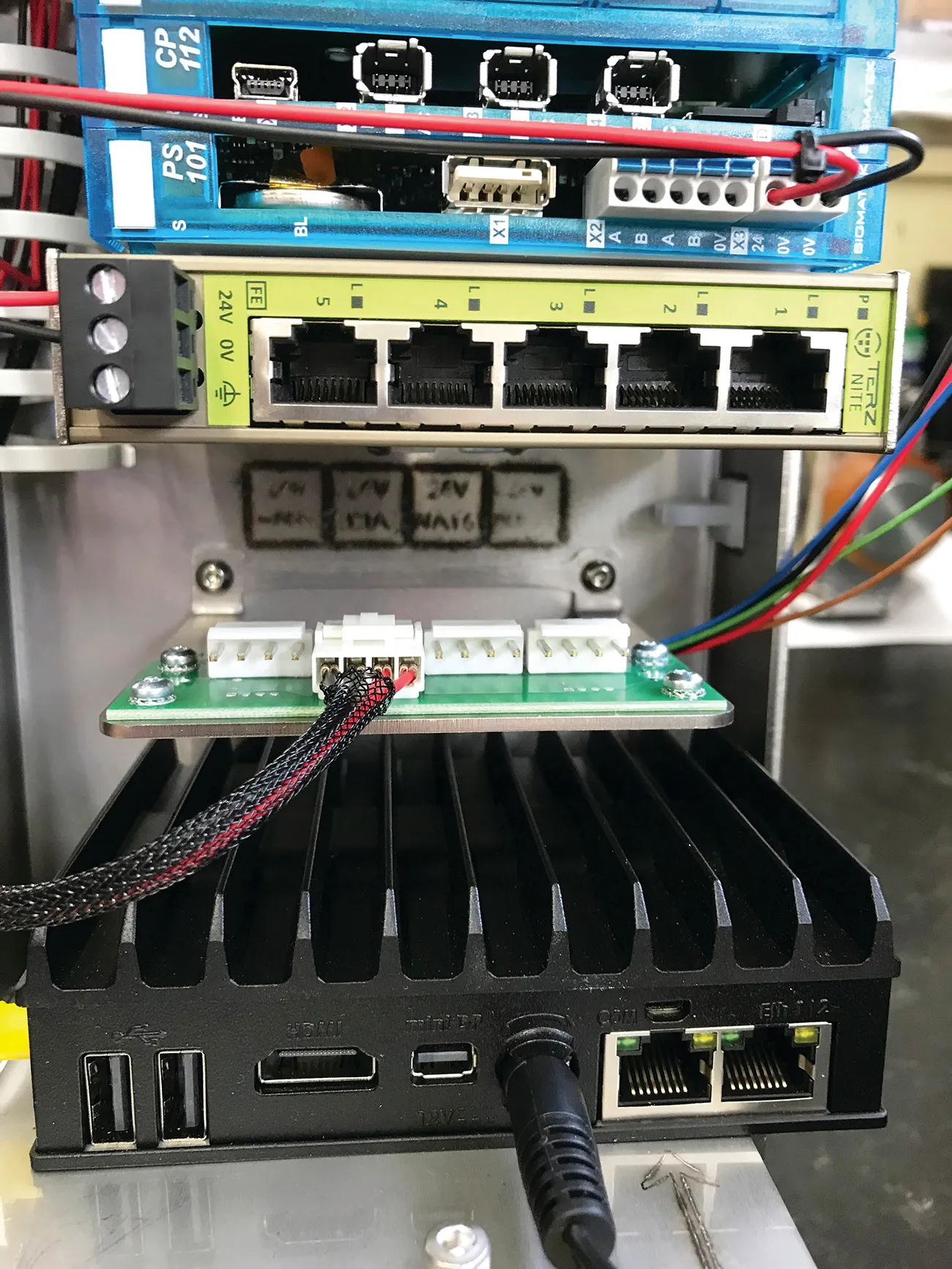
“To create the map, the vehicle needs to know its position precisely, but localisation also affects the map,” explains Otto Koller, head of image processing systems at Sigmatek. “That is why the two processes have to work together simultaneously.” This presents a formidable challenge, both mathematically and in terms of software. As with TCS, Sigmatek recognised the need for an open SLAM solution that could be easily integrated into AGVs and AMRs, regardless of the control technology used. The ambitious goal was to create a system that is ready to use within minutes, requires no pre-installed maps and delivers real-time accuracy of ± 10 mm and ± 1°, even when contours change significantly. The software also had to make few demands on hardware resources. After all, the box PC running it must not take up too much space or power in the vehicle.
Precisely determining vehicle position
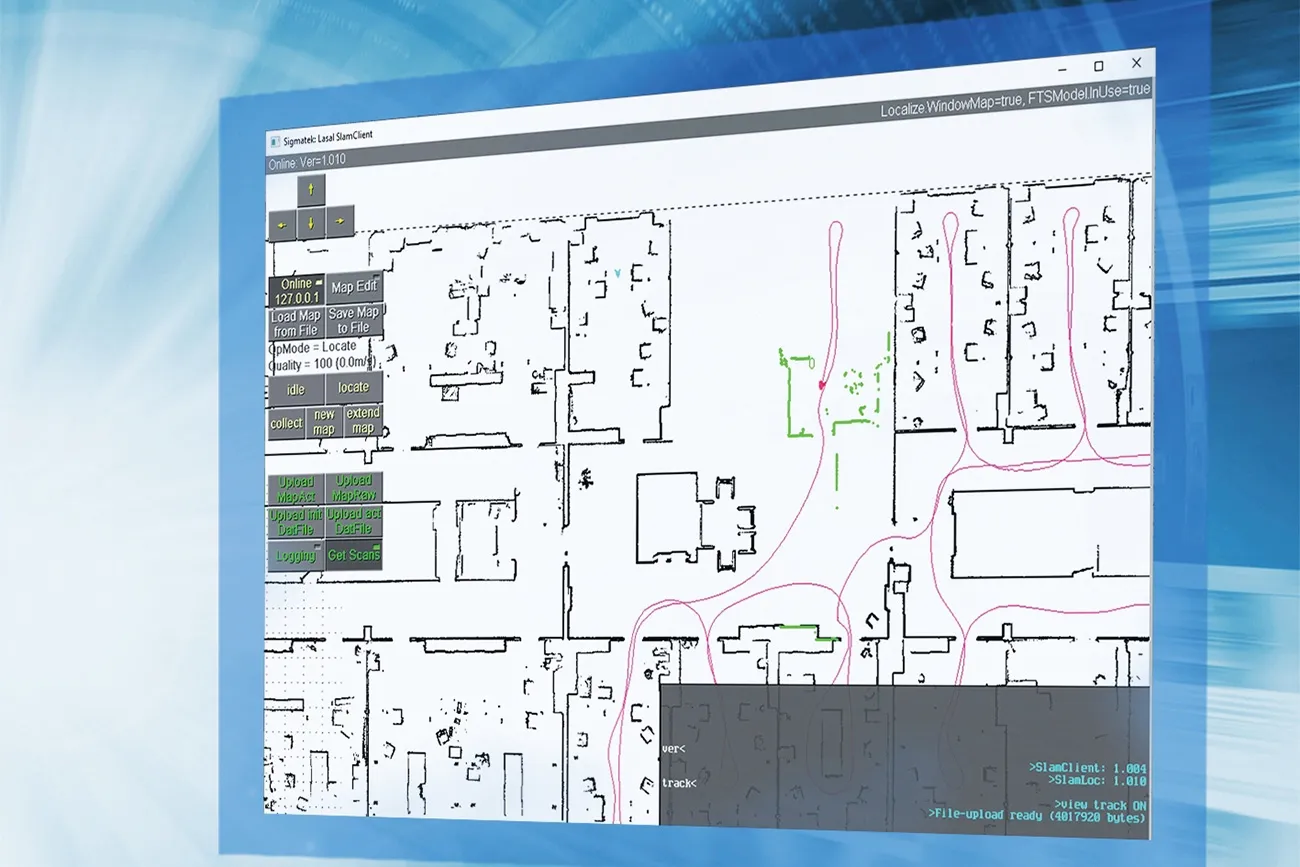
Sigmatek SlamLoc real-time localisation software redefines how AGVs and AMRs deal with changes in their surroundings. During the first run, SlamLoc creates a map of the surroundings as the basis for route planning. If an ‘unknown object’ is detected on a subsequent journey, it is incorporated and used to determine the vehicle’s position. This makes it possible to determine much more accurately where the vehicle is, in other words its X/Y coordinates and orientation.
“Stopping for an unexpected obstacle has nothing to do with this. That is handled by the vehicle’s safety system,” Koller explains. “Likewise, avoiding or driving around a new object is not SlamLoc’s responsibility, but that of a suitable control system such as TCS.” However, these systems can respond immediately based on the SLAM data and determine the best possible route in light of the new circumstances. SlamLoc therefore opens up the possibility of avoiding obstacles or taking alternative routes.
A torch for AMRs
“SlamLoc enables the mobile robot to navigate with uncompromising precision, even when full pallets obscure the contours of the hall,” says Koller. “It is like a torch that shows a walker details at night that a map and compass alone cannot provide.” Temporary, potentially moving objects gradually appear in the field of view as the vehicle approaches, then disappear just as gradually after it passes. Normally, these are not added to the static map. “Errors can accumulate over time and mislead the localisation system,” Koller explains. “If major permanent changes are made, we recommend a new ‘first run’ in the affected area.”
Complete freedom in variable environments
Authorised users can even create fully variable areas, where only features such as walls or ramps remain fixed reference points. The changing positions of racks and pallets are then dynamically recorded by the vehicle each time it passes. By deliberately avoiding the use of known contours, SlamLoc makes it possible, for the first time, to integrate goods-in or dispatch buffer zones. “Capturing the data without delay and processing it into a valid picture of the surroundings was one of the biggest challenges of my career,” says Koller. “It was only possible thanks to the collaboration of a very strong team.”
Fast, lightweight and built for industrial use
SlamLoc is designed so that no time-consuming initialisation is required when restarting. The vehicles begin determining their position and orientation as soon as they are switched on. The software is installed directly in the vehicle, which also helps ensure a quick start-up. Data is exchanged with surrounding systems via TCP/IP.
SlamLoc is available as software only or pre-installed on a rugged, industrial-grade box PC that communicates with fleet management systems such as TCS via WLAN. The optional SlamClient enables visualisation of actual driving movements and dynamic mapping, as well as processing. With TCS and SlamLoc, Sigmatek offers new, innovative solutions for intralogistics automation. These enable greater flexibility and efficiency while increasing the precision and reliability of AGVs and AMRs.
Question about this story? Ask your question
Companies in this story
Keep following this
Get an email when a new story is published. No account needed.
- ThemeFlexible production with robots
- SubjectSoftware, IT, OT & cybersecurity
- CompanySigmaControl