Software, IT, OT & cybersecurity
Seven challenges in mechanical engineering
Text Valérie CouplezImage Lenze

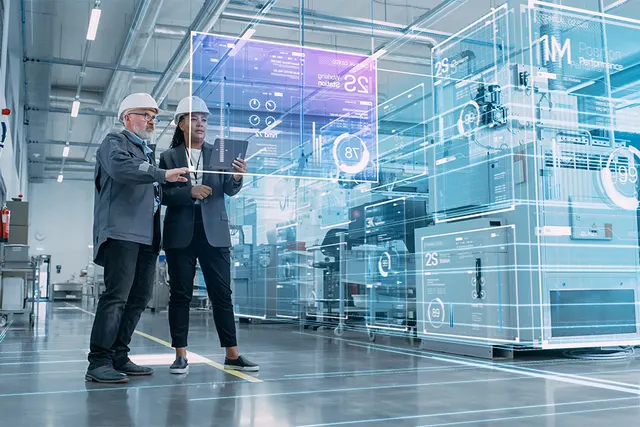
These are challenging times for machine builders. Geopolitical tensions, a shortage of skilled workers, higher energy prices and wage indexation, among other factors, are affecting the turnover and profitability of many companies. The answer lies in digitalisation, which can bring greater transparency, process stability and efficiency, and even enable new business models. But devising a digitalisation strategy is far from straightforward. Some companies have ideas but find them difficult to implement. Others may lack the inspiration to take this ‘new’ path. Whatever you need, Lenze is a partner you can rely on for every automation and digitalisation project.
Lenze sums up the challenges in seven areas for action. It all starts with a sound data strategy. Most large companies have one today, but many SMEs do not. Nevertheless, most machine builders are already focusing heavily on data. Data capture is ticked off, but what can we actually do with the data? Machine builders need to consider how this data could form the basis for new processes or business models. To take that step, however, they need to understand the data, have it available and be sure of its quality. The next step is to decide with whom, when and how to share the data, and what business models can be built around it.

Real-time simulation
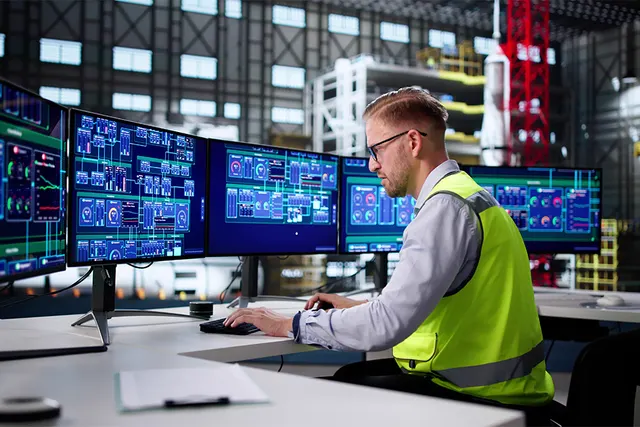
An important prerequisite for speeding up development is the use of real-time simulation. Your processes can then be run virtually at the same speed. The main challenge? The hardware and software must be fully synchronised. But those who succeed will reap the benefits: this speeds up commissioning, prevents errors, reduces costs and saves time.
Greater transparency
Legislators are increasingly demanding transparency. This creates opportunities to differentiate yourself through regulatory compliance. In the future, digital product passports, among other things, will become a reality. By thinking ahead and planning wisely now, you can turn a necessity into an advantage.
Artificial intelligence
There is no more pressing topic in automation than AI, yet in practice most companies get no further than a proof of concept. Scaling up is proving difficult. One particular challenge is understanding how Reinforcement Learning, which trains an AI agent through interaction with its environment, works and how it can be applied. Suitable tools are not always available for simpler problems either. There is also still a shortage of practical examples that can be deployed at scale across industry. In time, a new kind of service provider will emerge: the AI integrator.
New organisations
AI is changing processes, but also organisations. People who currently carry out tasks without AI will need to make active use of the technology in the future. This means there will be an even greater shortage of skilled workers, and existing workers will have to take on new and different tasks. Most machine-building companies will need to provide their employees with thorough training and create new job profiles.
AI experts
However much we digitalise industry, an engineer is not (yet) an AI expert. When companies want to start using AI in their products, they usually begin by hiring three PhD graduates. However, PhD graduates want to conduct research, not necessarily develop a market-ready product. One tip: if resources are scarce, get engineers to collaborate across company boundaries. And start by experimenting with open-source software. These solutions are sufficient for basic development.
OT meets IT
Whether you see them as oil and water or as salt and pepper, OT and IT are inseparable in modern production environments. Companies need hardware that meets today’s IT requirements. But they also need to understand the basic principles of cybersecurity and its importance to their business. Machine builders need to develop a patching strategy and implement new cybersecurity rules.
Conclusion
The challenges facing machine builders are considerable, but not insurmountable. However, the machine-building sector cannot avoid working with suppliers and even competitors. It is important to factor in the digitalisation of the business model and cybersecurity as early as the product development stage. It also helps to develop ideas with customers and bring suppliers on board. Lenze believes in collaborating with customers and develops machine-building solutions together with them.
Een zakelijke vraag aan Lenze? Get in touch
Companies in this story

Keep following this
Get an email when a new story is published. No account needed.
- ThemeFrom factory data to decisions
- SubjectSoftware, IT, OT & cybersecurity
- CompanyLenze