Software, IT, OT & cybersecurity
The first applications of the digital twin
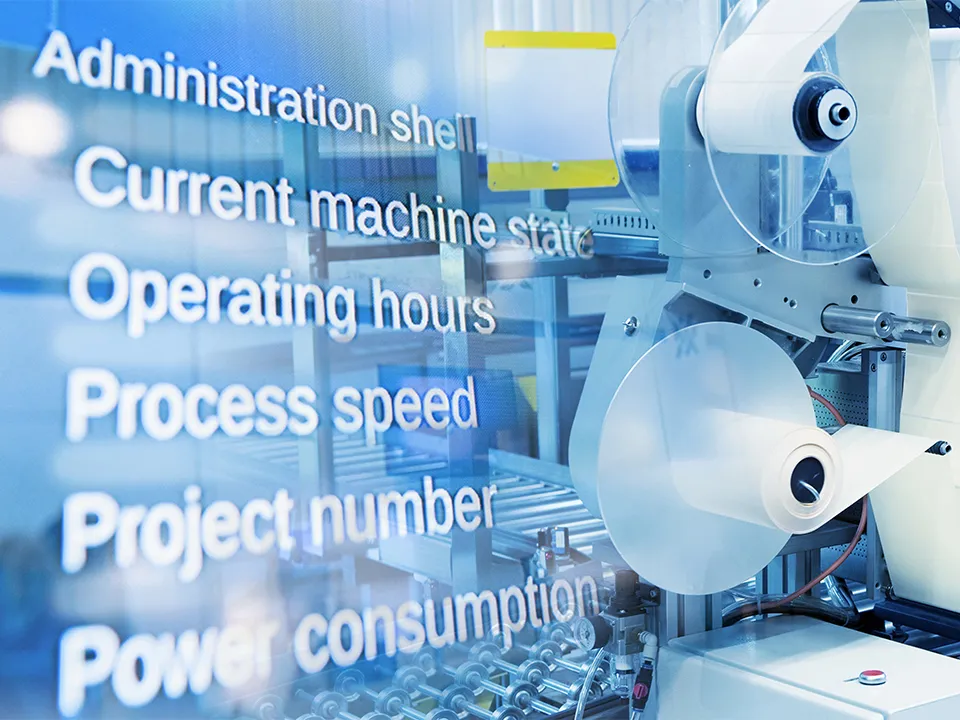
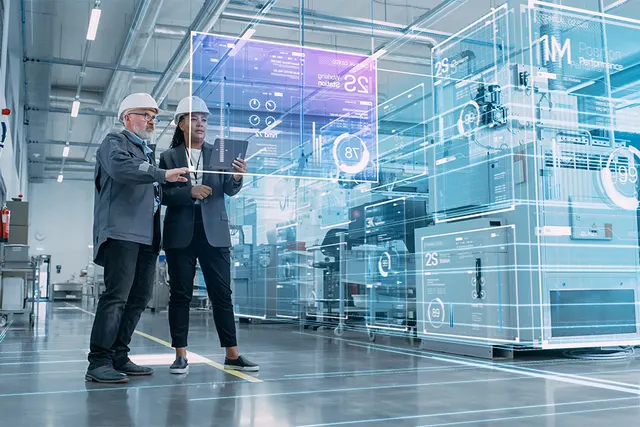
The outlook is clear: every factory, every machine and every component will have a digital twin. Customers will then be able to explore them, asset by asset, right down to the sensor, across the entire lifecycle, from engineering at the machine manufacturer to maintenance by the operator and beyond.
In future, digital twins will be as commonplace as providing datasheets on websites is today. At the recent Hannover Messe Digital, Lenze showed that digital twins are already more than theoretical concepts and are making their way into industrial practice.
Lenze has been researching digital twins for several years. The company, headquartered in Hamelin, Germany, is now taking further steps towards their implementation. Developers and designers can use a web service, the EASY System designer, to create an initial digital representation of a machine. Further web services then enrich this structure directly with technical data and documentation for the equipment used. The resulting digital twin provides a new, standardised and automated consistency of data and information, forming the basis for use in further tools and applications. And these are just the first steps. “We are moving towards concrete implementation. We will make asset data for our system components, such as the digital nameplate, technical data and documentation, available via web services. This may not sound particularly exciting at first, but the added value across the entire lifecycle of a system is enormous, because this data is passed on from engineering through commissioning to maintenance,” explains Patrick Bruder. He is Business Development Manager Automation at Lenze.
A shared data repository
Making component data available from the supplier simplifies integration processes in the development project. The aim is to bring products to market faster and more cost-effectively by avoiding duplicate modelling and, ideally, enabling development entirely without hardware. Lenze’s automation specialists want to move beyond simply visualising a product. A digital twin is the complete digital representation of a machine or system in all its aspects. It is not necessarily a specific file or model, but rather a framework encompassing all versioned and referenced product data. This allows all tools to work from a shared data backbone throughout the product lifecycle, with further information added at each stage.
About Lenze
Lenze is a leading automation company for machine builders and a specialist in motion-centric automation. As a systems provider with solution expertise, Lenze works for and with its customers to create high-quality mechatronic products and packages. These are powerful systems that combine hardware and software for machine automation with digitalisation services for big data management, cloud and mobile solutions, and IoT software. Lenze employs more than 3,700 people worldwide and is represented in more than sixty countries. Lenze’s growth strategy involves continuing to invest heavily in Industry 4.0 in the coming years.
Question about this story? Ask your question
Companies in this story

Keep following this
Get an email when a new story is published. No account needed.
- ThemeFrom factory data to decisions
- SubjectSoftware, IT, OT & cybersecurity
- CompanyLenze