Software, IT, OT & cybersecurity
What will the robots of the near future look like?
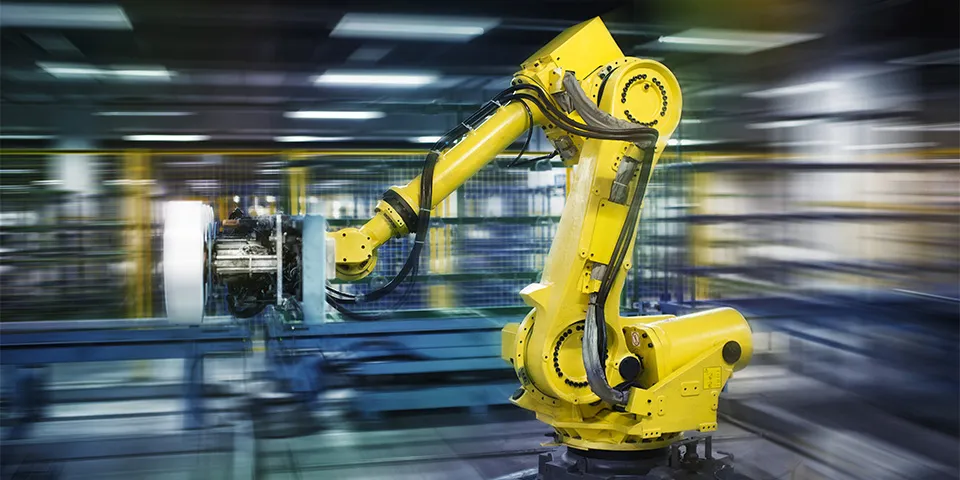
A production floor without robots? That will be a rare sight in the future. The accelerating pace of automation over the past few decades has already brought about a major shift, and there is no sign of it slowing down or coming to a halt. Several new trends will continue to set the pace and have a lasting impact on what a production floor looks like. A look ahead at six topics.
Manufacturers turn to robots to perform tasks that require precision and persistence, or involve risks. Robots are especially welcome workers where repetitive tasks need to be carried out or working conditions are too extreme. In the coming years, they will appear throughout production, and their numbers will grow exponentially. The more they are used on the shop floor, the more opportunities people will see to devise new robotic concepts and discover new ways to complete production tasks. Specialists point to six key trends.
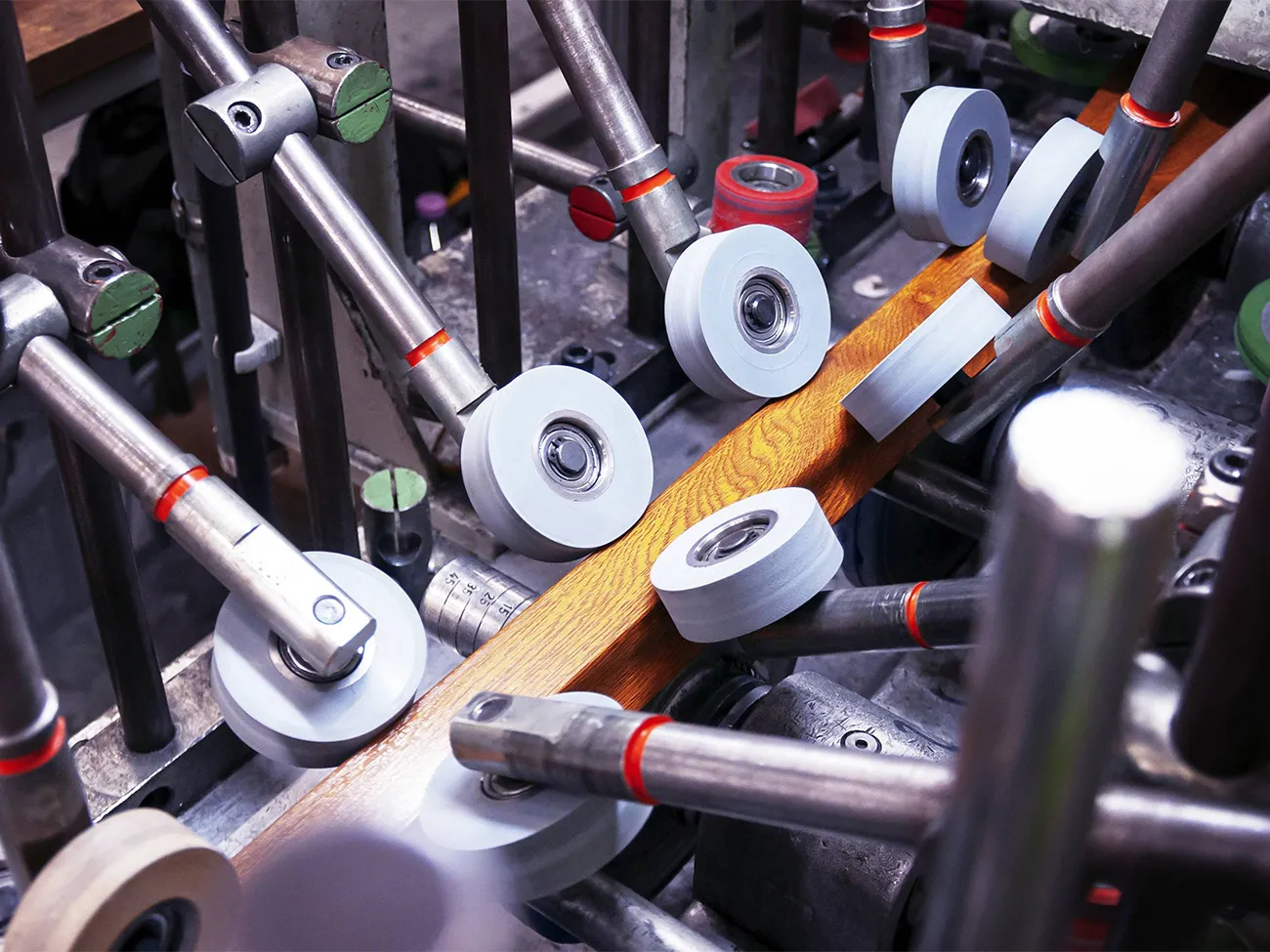
Heavy-duty robot arms in particular are set to grow impressively in the coming years. These are robot arms capable of handling loads of a tonne or more, much more. (Image: Chesky W)
1. Arms that can take a knock
Robots are designed to make work easier. Compared with a human arm, a robot arm can keep productivity going indefinitely and is not at risk of injury from fatigue or overexertion. Heavy-duty robot arms in particular are set to grow impressively in the coming years. These are robot arms capable of handling loads of a tonne or more, much more. According to market analysis, demand is expected to reach 14.7 billion dollars by 2026, representing a compound annual growth rate of 4.73%. Companies using robots will see more and more opportunities to deploy these heavy-duty arms. Advances in technology have greatly increased the strength, reach and functionality of robot arms.
2. Collaborative robots go mobile
Collaborative robots are gradually making their way into industry. Whether they are working on assembly lines or loading and unloading machine tools, they are used to having people nearby. In the coming years, they will move from fixed workstations to mobile applications. Cobots are compact, lightweight machines that can easily move between work areas or zones in a factory. Their major advantage is that, following a thorough risk assessment, they can also be used in inherently safe applications. With forklifts, lift trucks, stackers … operated by people, the risk of a collision can never be ruled out. The consequences could include staff being unable to work, or damage to products, machines or infrastructure. Cobots can significantly reduce these risks.
An exoskeleton is a perfect example of robotics. Although a great deal of pioneering work has already been done, industrial applications have so far failed to take off because they require a connection to a power source. That is set to change.
3. Safety first
Cobots are not the only robots that can work safely alongside people. Safety awareness is also increasing significantly when it comes to conventional robots. Large, powerful robots have traditionally been tucked away in enclosed work cells, far from any possible interaction with people. But with sensors being introduced into these enormous production machines, robots, far less may be needed in the coming years. For example, 3D sensors can create a 3D image of the robot’s surroundings. The connected software identifies objects and estimates the paths along which they are moving. The same applies to people. Robots can then adapt their own movements accordingly. For now, cobots are limited in the weight they can carry. Such solutions could provide an alternative for heavy-duty applications, allowing robots to work closer to people.
4. Into danger
Robots are appearing in every branch of industry. They may be most useful where people have to work in the most dangerous conditions. There is still considerable progress to be made in this area in the coming years. First of all, the technology needs to catch up, enabling robots to deal with toxic gases and heavily polluted smoke plumes, or even operate in areas with flammable vapours. Manufacturers are expected to bring out models within the next five years that can take over tasks performed by people in such environments. This will allow people to work more safely elsewhere in the company.
Robots made from softer components are also being actively developed. (Image: Ruediger J. Vogel)
5. Soft on the outside, strong within
Robots made from softer components are also being actively developed. If covered with a material such as plastic or rubber that can withstand the stresses of continuous movement, robots would instantly become much safer to work alongside. The impact of accidental contact would already be lower. There are many experiments under way, with engineers often taking inspiration from nature. One example is a robot shaped like an elephant’s trunk. Lifting capacities are still limited for now, but progress is also gathering pace as developers seek to strike a balance between brute force and a soft exterior.
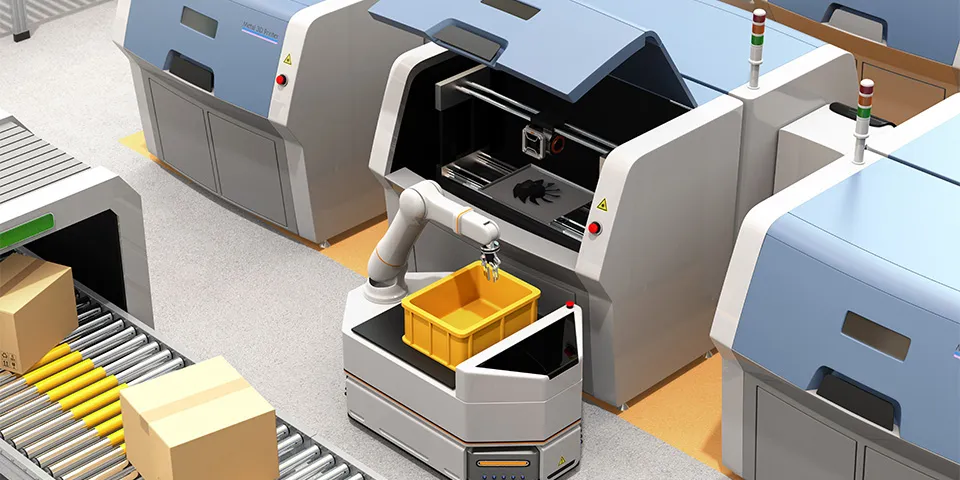
In the coming years, cobots will move from fixed workstations to mobile applications. Cobots are compact, lightweight machines that can easily move between work areas or zones in a factory. (Image: Chesky W)
6. Improved exoskeletons
An exoskeleton is a perfect example of robotics. Although a great deal of pioneering work has already been done, industrial applications have so far failed to take off because they require a connection to a power source. The first industrial exoskeletons powered entirely by batteries are expected from next year. Such a robotic solution should give users a 20:1 amplification of force. In other words, someone who has to lift 100 kg will feel a load of just 5 kg. The market for robotic exoskeletons could already be worth around 5.2 billion dollars by 2025. They have enormous potential, particularly in industries such as shipbuilding and aerospace, where very heavy components have to be handled.
Question about this story? Ask your question
Keep following this
Get an email when a new story is published. No account needed.
- ThemeFlexible production with robots
- SubjectSoftware, IT, OT & cybersecurity