Ironhand: superhuman strength under control
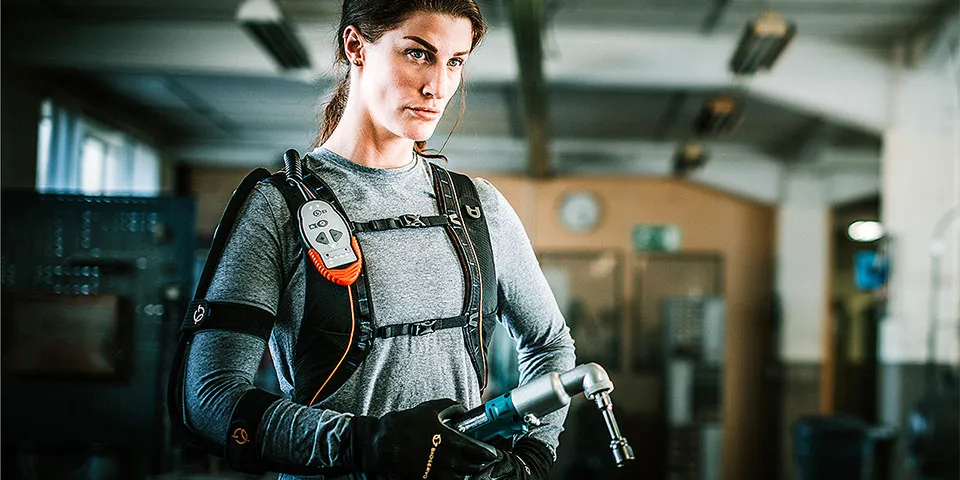
Work-related musculoskeletal disorders are common in Europe and North America. They are one of the main causes of long-term absence from work: 45% of all occupational illnesses involve problems with the neck, shoulders and arms that have developed in the workplace. In Europe, the annual cost is around 2.1 billion euros. Wearables, such as clothing with built-in technology, are among the solutions being used to prevent these injuries. One example is the Swedish Ironhand® from BIOSERVO TECHNOLOGIES, a soft robotic glove that uses the company’s patented SEM™ technology to enhance human grip strength. FAULHABER drives provide power assistance to the individual fingers.
At European level, repetitive work is the biggest risk factor. 74% of employees in the European Union perform repetitive arm or hand movements for at least a quarter of their working time. According to the German occupational safety and health institute, musculoskeletal disorders are the most common cause of reduced ability to work, serious injuries, early retirement and temporary incapacity for work. The European Agency for Safety and Health at Work conducted a survey in which 45% of respondents said they experienced painful or tiring postures at work. 25% reported back pain and 20% muscle pain. Research suggests that by 2030, half of all employees could be affected by these kinds of disorders.
The category “work-related neck and upper limb disorders” covers the neck, arms, wrists, hands and fingers. Symptoms include tingling, numbness, irritation and pain. Cold environments and the use of vibrating tools can make symptoms worse, reducing mobility and grip strength. This often creates further risks in the workplace, for example if employees can no longer hold their tools securely or use them in a controlled and safe manner.
Demographic changes also play a role: as populations age and retirement ages rise, people remain active in the workforce for longer. This makes workplace ergonomics increasingly important, both for healthy employees and for those who already have physical limitations. Some solutions focus on improving the ergonomics of the workstation, whether a workbench, desk or conveyor belt. But companies are also increasingly relying on more direct support or assistance for their employees. One example is the exoskeleton, which is worn on the body like a garment.
Ironhand
Stronger hands
Ironhand® from Swedish company BIOSERVO TECHNOLOGIES is a soft, active exoskeleton for the hands and fingers: a power glove. Normally, gripping movements are controlled by the muscles in the forearm and hand. The muscles pull on tendons, moving the fingers. Ironhand® simulates this function: pressure-sensitive sensors in the glove’s fingertips detect when the wearer makes a gripping movement. A computer integrated into the system calculates how much additional grip strength is needed. Small servo motors then pull thin cables inside the glove’s fingers. The more pressure the sensors detect, the more force Ironhand® provides. The glove’s settings can be adjusted to suit personal preferences and the type of work being performed. Data functions enable a digital risk assessment of the hand and allow the user to be fully integrated into the Industry 4.0 factory of the future. Data analysis can identify tasks involving frequent gripping during work, and therefore higher ergonomic risks, so users can take appropriate measures.
Individual and flexible
The glove is available in four sizes and is suitable for both left- and right-handed users. The battery pack is carried in a backpack and also contains the computer and the motors that control the individual fingers. Users can set up various profiles in advance, with different combinations of sensor activity, force, finger symmetry and “grip habits”. The user can change the profile at the touch of a button on the remote control on the chest.
The profiles make it possible to adapt flexibly to the demands of different tasks performed throughout the working day, for example when someone does lighter work in the morning and tasks that place greater strain on the muscles in the afternoon. This means that men and women can work with the same system. Within a few milliseconds, the glove can provide up to 80 N of grip force.
The system is also designed to be worn with personal protective equipment (PPE), such as safety gloves, fall protection, helmets or high-visibility clothing. Users can put the glove on and take it off themselves during breaks. The battery capacity is sufficient for a typical working day.
1741 CXR
Powerful drive
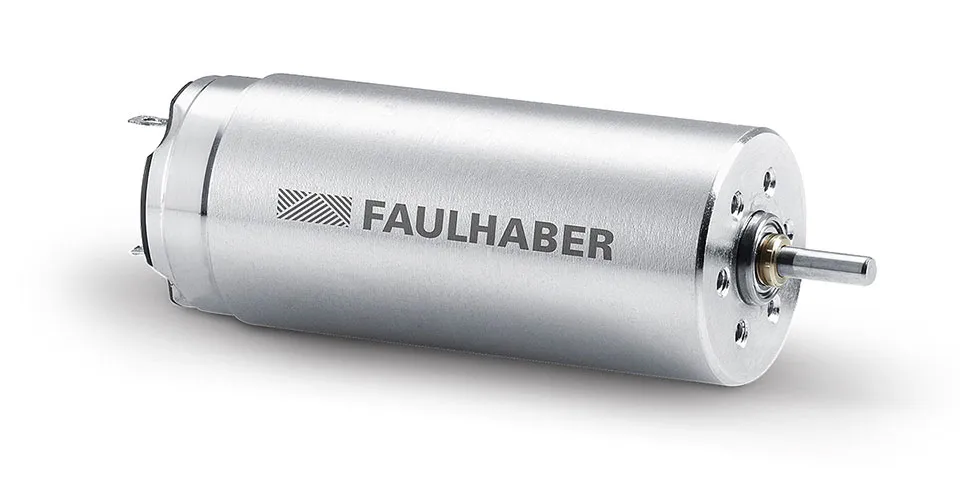
To control the individual fingers, BIOSERVO chose DC micromotors with graphite commutation from the 1741 … CXR series for its Ironhand ®. The series combines power, robustness and control in a compact design. This is achieved through graphite commutation, high-grade neodymium magnets and FAULHABER’s proven rotor winding. The powerful neodymium magnet gives the motors a high power density, with continuous torque ranging from 3.6 to 40 mNm. Their impressive performance data and compact size open up a wide range of applications, with an optimal price/performance ratio.
Martin Remning Wahlstedt, Development Director at BIOSERVO, is convinced of FAULHABER’s capabilities: “We chose the 1741 … CXR for Ironhand® because we have already had good experience with FAULHABER drives in our products, and because we have a long-standing partnership with the drive specialist and Compotech, its Swedish sales partner.”
Question about this story? Ask your question
Keep following this
Get an email when a new story is published. No account needed.
- SubjectProduct information