The right compressed air quality: how and why
Text Marjolein de Wit-BlokImage Pixabay, ISO en Festo

In many (industrial) sectors, compressed air is an important energy carrier. Depending on the industry, it must meet a certain quality standard, primarily in terms of the presence of dirt particles, oil and moisture in the medium. This issue therefore requires attention both during the design of a machine and throughout its operation and maintenance. Those who manage this effectively through the right measures, including a good air preparation unit and measuring equipment, can benefit from high process reliability, high machine availability, longer maintenance intervals and good product quality.
Compressed air is always contaminated to some extent with particles, moisture and oil. This is simply because air is drawn in from an often industrial environment or from outside, and is then pressurised in a compressor. In almost all cases, compressed air therefore needs to be treated before it can be used at the required quality.
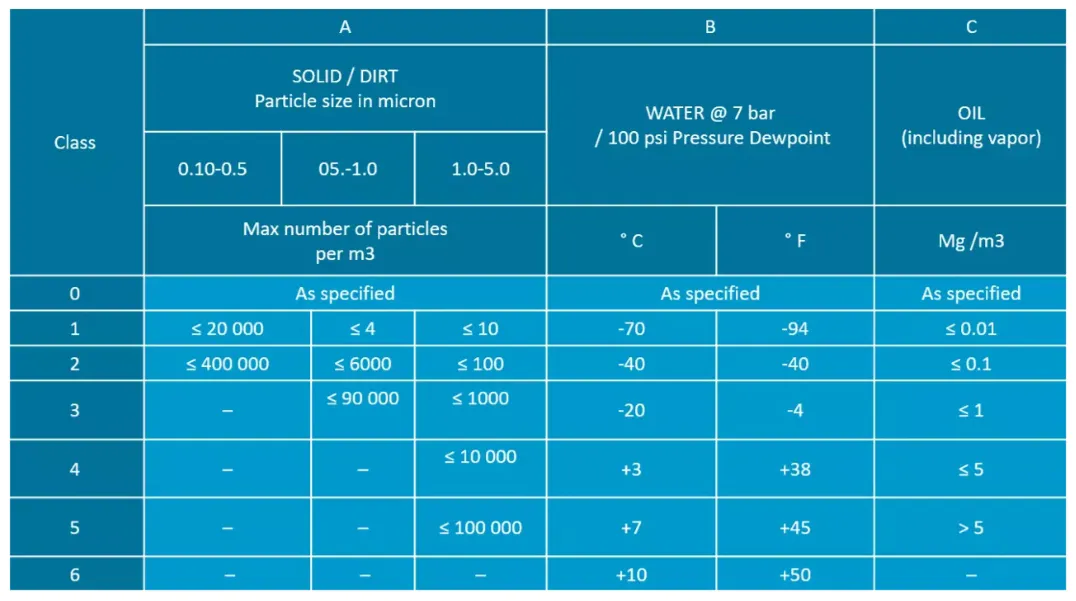
ISO standard 8573-1
The key standard for compressed air quality is ISO 8573-1. This internationally recognised air quality standard divides air quality into seven classes, based on the three main types of contamination: particles, moisture and oil. The required quality depends on the application. If compressed air is used only to blow, for example, swarf off a workbench, few quality requirements will apply.
However, compressed air used in the food or pharmaceutical industries must meet extremely high standards to prevent contamination from the compressed air from adversely affecting the health of users or consumers. Untreated compressed air can also contain heavy metals such as lead, cadmium and mercury, elements that should not end up in food or medicines. Water in compressed air can, in turn, accelerate bacterial growth. But there is more. Compressed air of an acceptable quality has a major influence on the reliable operation of machines in general. Contaminated compressed air can cause, among other things, faster seal wear, problems with oil-lubricated valves in the control section and dirty silencers. Ultimately, this shortens the service life of components, increases maintenance costs and the risk of unplanned downtime and, not least, significantly increases energy consumption.


Compressed air system design
Compressed air quality can be achieved and maintained in various ways. It starts with the design of the compressed air system, where the choice of the right components plays an important role. The location of the compressor within the company also matters. For example, if a compressor is located close to a motorway, the air it draws in will be considerably dirtier than the air drawn in by a compressor in a conditioned room.
The intake and compressed air are treated to the required quality level using what is known as an air preparation unit. This combines functional modules, such as supply and exhaust valves, pressure regulators, filters and compressed air dryers, which remove the various types of contamination from the compressed air. Some suppliers offer units with a configurator that allows even complex preparation systems to be configured individually, step by step.
Finally, compressed air quality and the operation of the air preparation unit can be monitored using the right sensors and suitable measuring equipment. This makes it possible to detect filter element saturation in good time, as well as trends that provide the basis for optimising or maintaining the machine.
Question about this story? Ask your question
Keep following this
Get an email when a new story is published. No account needed.
- SubjectProcess & instrumentation